Isaac Hans zooms in on a gifted photographer in our Spring 2026 Artist Feature
By Isaac Hans
Edward Burtynsky’s work lives in tension with the sublime. The sublime is one of those slippery words in the art world — said often, rarely defined. In 1757, Edmund Burke described it as a greatness beyond calculation, measurement, or imitation. It is the feeling that overtakes you when you stand before something too vast to fully comprehend. The sublime can arrive as awe or as terror. Sometimes, it encompasses both.
Burtynsky photographs the earth from above, usually from a helicopter. What we are used to seeing at eye level — industry, waste, waterways, mines — becomes something else entirely when viewed from the air. From above, the earth flattens into patterns. Extraction sites resemble abstract paintings. Landfills start to look like tapestries. We are invited to see differently.
In his statement that accompanies a collection of photos he has labeled his Water project, Burtynsky writes, “While trying to accommodate the growing needs of an expanding, and very thirsty civilization, we are reshaping the Earth in colossal ways. In this new and powerful role over the planet, we are also capable of engineering our own demise. . . . My hope is that these pictures will stimulate a process of thinking about something essential to our survival; something we often take for granted—until it’s gone.”
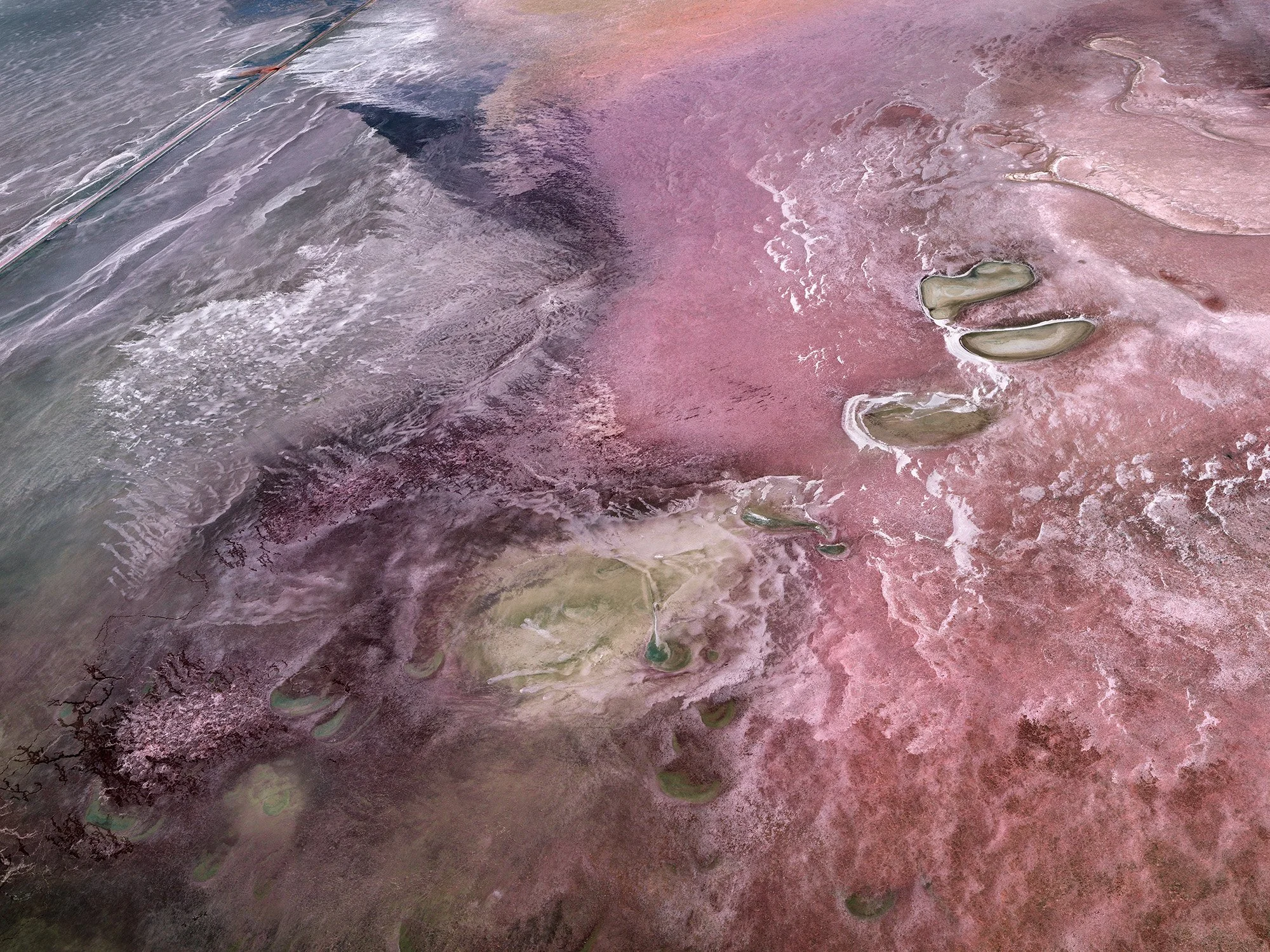
Edward Burtynsky: Salt Flats #2, Sua Pan, Botswana (2019)
In a world where climate activism is often filled with loud voices and harsh words, Burtynsky’s work has an invitation. His images hold a mirror to our age and ask a simple, uncomfortable question: What have we done with the world we were given?
Looking at one of his photographs, you feel it immediately—that double movement of the sublime. Awe at the scale. Awe at human ingenuity. Awe at the intricate beauty of color and form. And then, beneath it, a terror. A recognition that the beauty is bound up with damage. That the patterns are born from excavation. That what looks like stained glass might, in fact, be chemical runoff.
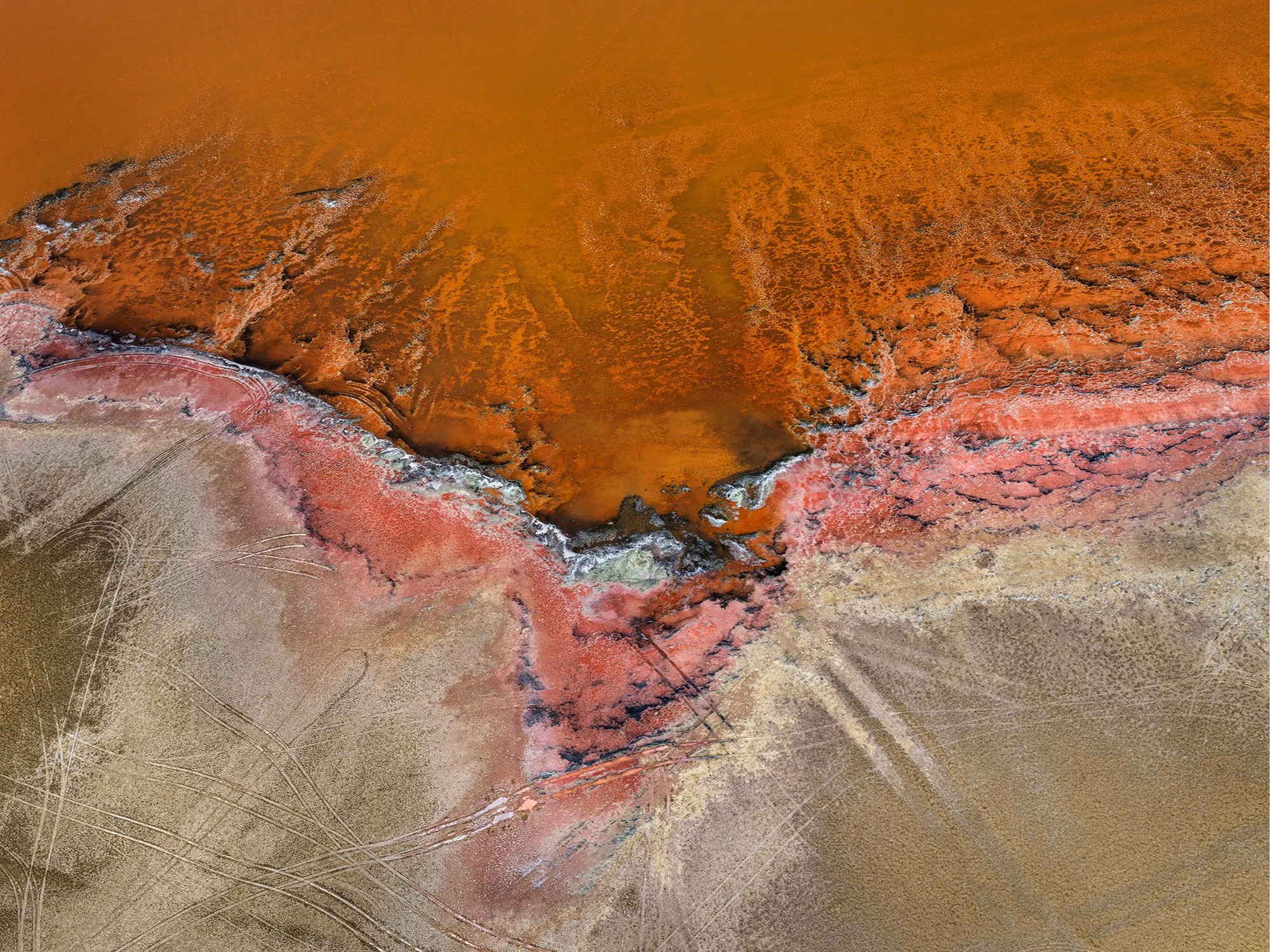
Edward Burtynsky: Swakopmund Salt Works #1, Swakopmund, Namibia (2018)
For Christians, this tension feels familiar. We were called to cultivate, to shape, to participate in the ongoing creativity of God. We are sub-creators, and yet, we are also capable of distorting creation. The 24-hour news cycle trains us to see only catastrophe—climate issues, political unrest, cultural disagreement. It can feel like winter without end. But we know that there is hope.
Consider Salt Flats #2 and Swakopmund Salt Works #1. One landscape is an untouched mineral plain; the other is engineered evaporation ponds. From the air, both photographs shimmer with color and radiate a strange glory. The natural and the cultivated echo one another. It becomes difficult to tell where creation ends and human intervention begins.
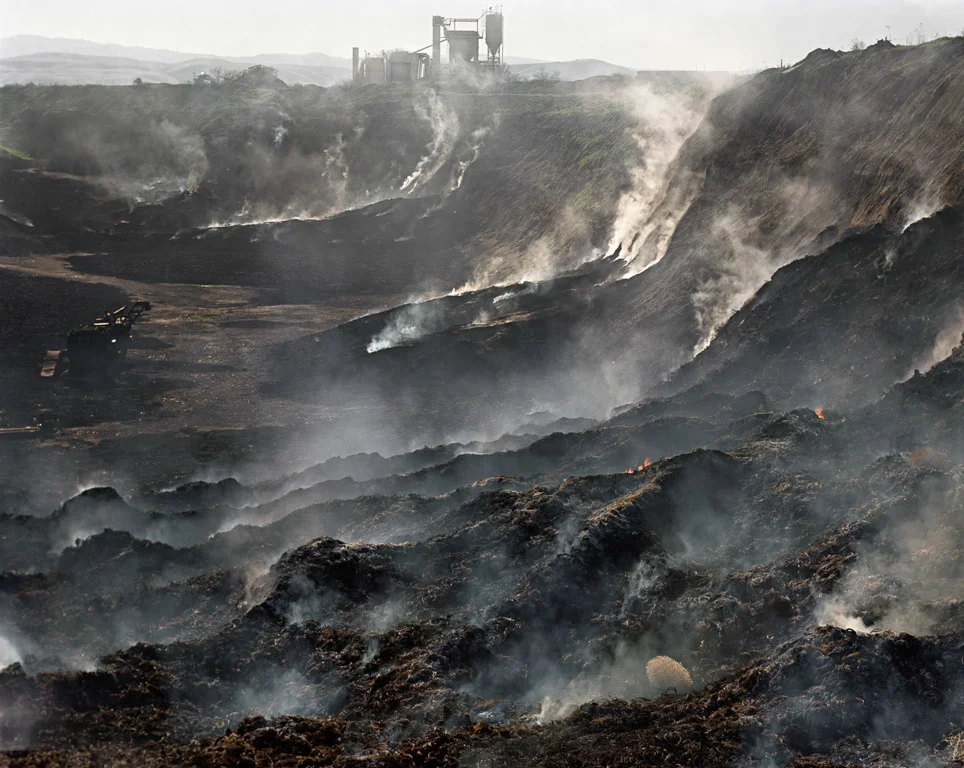
Edward Burtynsky: Burning Tire Pile #1, Near Stockton, California, USA (1999)
His images are not purely celebratory. In Dandora Landfill #1 and Burning Tire Pile #1, the awe turns darker. The scale overwhelms. Waste rises like a mountain. These are not neutral images. They testify to misused power and fractured stewardship. They remind us that our creativity can deform as easily as it can adorn.
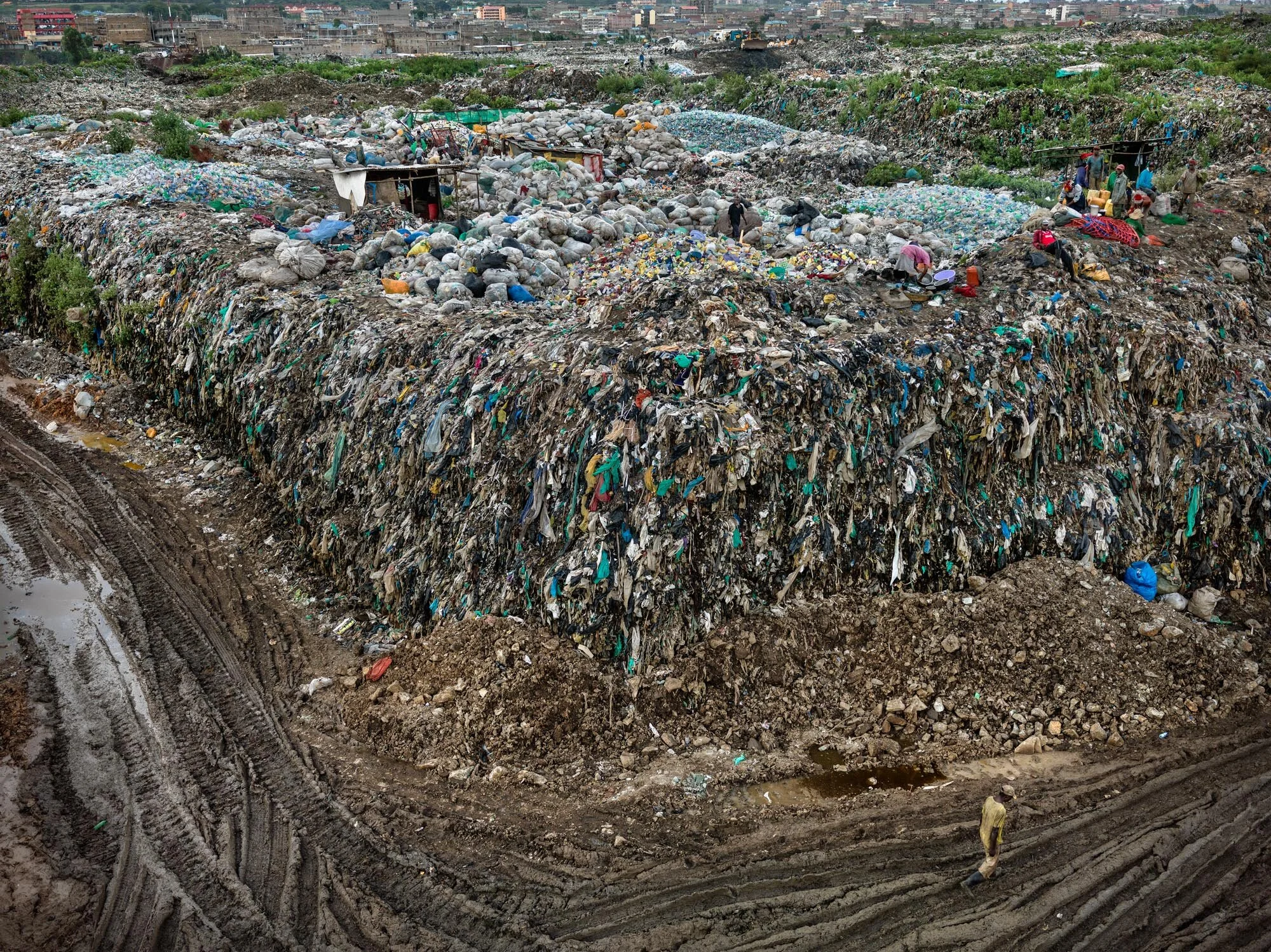
Edward Burtynsky: Dandora Landfill #1, Nairobi, Kenya (2016)
This is where Burtynsky’s work begins to show hope in the despair. Not because the damage disappears. Not because the photographs offer easy optimism. But because they unveil a deeper pattern—one embedded in creation itself. I think that is what gives us the feeling and experience of the sublime, a recognition of something greater. Death does not get the final word. The earth, even scarred, continues to bear beauty. The materials of our failure are not outside the reach of redemption. Our world is fallen. The fractures are real. But so is the pattern beneath them. Burtynsky teaches us to look from another angle—to see that even in the aftermath of our making and unmaking, creation is not finished.
Edward Burkynsky
Edward Burtynsky is regarded as one of the world’s most accomplished contemporary photographers. His remarkable photographic depictions of global industrial landscapes represent over 40 years of his dedication to bearing witness to the impact of human industry on the planet. Burtynsky’s photographs are in the collections of over 80 major museums around the world, including the National Gallery of Canada in Ottawa; the Museum of Modern Art, the Metropolitan Museum of Art, and the Guggenheim Museum in New York; the Reina Sofia Museum in Madrid; the Tate Modern in London, and the Los Angeles County Museum of Art in California.
Isaac Hans is a visual artist and photographer based out of Colorado Springs. Influenced by the history of American road trip photography, his work focuses around ideas of longing, spirituality, and the mundane.